The first quarter of this year was very forgiving of any errors. We’ve had low volatility, generally positive economic reports, and even Europe has been less in the news than previously.
Watch my video for my thoughts about the 1st quarter, and to find out if I’m still optimistic for the 2nd quarter and rest of the year.
TRANSCRIPT:
Good morning! Mike Brady with Generosity Wealth Management and I am here in Boulder Colorado, giving you my first quarter review and my second quarter preview.
Absolutely wonderful first quarter; I’m going to throw some of the numbers up on the screen, if you can look at them, looking great. I don’t know the exact numbers because I’m actually doing this on Thursday and the quarter ends tomorrow but I wanted to get this to you as quickly as possible the first week of April. But we have incredibly low volatility right now, so unless something really big happens on Friday, I thought I was safe.
This first quarter, very forgiving of any mistakes, almost every sector was up. Very strong quarter, we have six months that are up, the last six months; October, November, December, January, February, March. If you look at my video, and I’m going to provide a link to my video the first or second week of January, where I look at 2012, I stand behind what I said at that time. Which I believed that there was going to be some volatility for 2012, and I think we still have to see that. We’ve actually had unbelievably low volatility but I also said that I was optimistic about 2012. I believe then, and I believe now, so I’m sticking to my conviction, that the cash, the strength of the corporations of the companies that are out there, and that the PE ratios are low, that the companies are actually undervalued for what…, when they decide to deploy some of that capital back into their businesses, and into research and development and to really move things forward, this will be a very good thing. And increase the valuations from where they currently are.
And so I continue to be optimistic. I mean, I’m asked every once and a while why the volatility is so low right now? I mean, let’s, you know, together just remember when there was 100 point DOW swings all the time, and frankly, all the way up to 4 and 500 point swings. We haven’t seen that this past quarter and in quite some time. It’s my belief that the investors are out there, both professional and you know, kind of household investors, are not really having one conviction, one way or the other that this is a market that they absolutely have to participate in- and so strong on the “buy” side; or those that they absolutely don’t want to be a part of. I think it is somewhat of a low volume, listless market at this particular point.
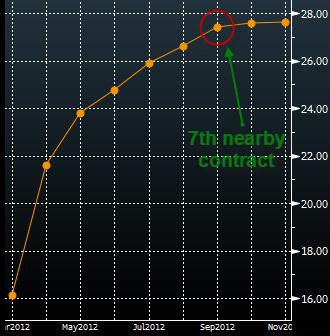
Now that being said, as we look at the VIX, which is the volatility index, currently, kind of the spot price is very, very low- which is what we’ve seen. But when we start to go out, you know, two, three, four months, there actually is more implied volatility. So the market believes that the volatility will increase in the coming months and that makes sense. We should not be lulled into thinking that just because this last quarter was very low volatility that the next quarter or even the quarter after that will be low volatility.
This is also an election year. Let’s not forget about that. November, the first week of November is, one way or the other, when I say one way or the other, whether you’re a Democrat or Republican, whichever one that you want to win, at least there’s going to be a certainty about who’s going to win, and so that uncertainty starts to go away. And that’s a good thing, I think, for the markets the last quarter of this year, November and December.
But that being said, let’s get back to the second quarter. I think that things will continue to go forward. If I’m wrong, let’s say that I’m absolutely wrong, and the second quarter is negative, that’s one of the reasons we go back to our foundation, some of our basic investing 101, which is to remain diversified. I do believe that each client needs to look for themselves, and I work with my clients to determine, what’s the appropriate allocation of both stock and bonds? Because what I have found is that the thing that I love the most, many times I’m wrong on, the thing that I hate the most, sometimes I’m wrong as well. I remember a quote from Peter Lynch, who made Fidelity Magellan in the 80s extremely famous. He said, “you know I love all my stocks that I buy. That’s why I hold them, is that I like my stocks, I think they’re going to do well. But invariably, on 20% of them, I’m wrong. That’s just the way it is and I just have to learn to live with it.” And so, that’s one of the reasons why we diversify, is while I am optimistic, while you might ask yourself what’s my conviction? Do I believe the United States is the place that I need to invest in, both our companies and kind of stop listening to all the “perma-bears”; you know, people who for the last three years, as the market has basically just done extremely well, are always the naysayers. I mean there’s always something to be negative, if you’re looking for negative. But that’s why you remain diversified. I have my clients that way, I’d be happy to help you out if you’re not one of my clients.
So, anyway, that’s my video this week. I continue to be very pleased with the first quarter. I continue to be optimistic as the year unfolds. And there will be some volatility going forward, probably increased volatility, but you know what, hopefully we’re well prepared for that and I’ve … you know, we’re ready. When it happens we’ve already planned for it. And we’re thinking about it.
So that’s my video, and on a personal note, I usually go to Africa sometime during the year, usually in April. This year I am not going. I’m very pleased that my business is frankly hit a point where it’s really growing. I’m working with my clients, just absolutely having a great time doing that. So many of you have referred people to me and I’m working with them as well. I do some great stuff with two wonderful organizations in Uganda and Rwanda; BeadforLife in Uganda, and Peacemaker Institute doing some assistance with Genocide reconciliation in Rwanda that’s really kind of a humanitarian thing. I’m absolutely moved by the impact that we’re having there but also with BeadforLife in Uganda. It’s an income generation, kind of a women’s empowerment project there in East Africa. And I usually go there as I’m on the board of both those organizations. Perhaps I’ll be able to go later this year but for right now I am here in Boulder, working with my clients and of course, watching things very closely.
Give me a call, 303-747-6455, Mike Brady, Generosity Wealth Management. And I have a couple of disclosures here coming so of course stay tuned for those but you have a wonderful week and let’s all have a great quarter. Thanks! Bye, bye.
In case you’re curious about my video at the beginning of the year, here it is.
The VIX (implied volatility index) has become very steep.
The 7th contract (6 months out) is significantly higher than current implied volatility.
What does this mean?
It simply means that the market is pricing in risks of a correction later on in the year.
Will it happen? Nothing is for certain, and if you have a long term diversified strategy (which hopefully you do) then this may just be a bump in the road
It is common for there to be declines in the markets throughout the year, sometimes even double digits declines.
This is to be expected.
As an investor, one of the reasons we diversify and modify our allocations throughout the year is to try to minimize these fluctuations.
What should you do when there is one of these expected declines? It depends on the situation at that time.
Please click on the video below for a 4 minute discussion I give on this topic……
TRANSCRIPT:
Hi there, Mike Brady with Generosity Wealth Management, here in Boulder, Colorado. And I this week I want to talk about intra-year declines, and frankly, the correlation they have with the end of the year returns. Because, I talked about this just a little bit when I did my end of the year video (kind of beginning of the year video) where I said that on balance, I’m optimistic for 2012. And at that time I said, “listen, it’s common for there to be volatility,” but volatility has increased in the last couple of years and I believe that volatility will continue going forward.
It is common for there to be, within the year (intra-year), declines that we seem to forget after the year is over. Negative, kind of from the high to the bottom, within a year of you know, eight, nine, even double digits, but that doesn’t mean the year is going to be horrible. So as 2012 unfolds, we’re going to find some times where it’s not as high as it used to be, OK? That the market has declined, and that is part of the process, part of the journey and the travel. Now that being said, the reason why we diversify, and we adjust our allocations throughout the year is to try to minimize the impact that we have. But we know that it’s going to happen.
So the question that we ask ourselves at that time is, “why is this going down, you know, why is the market going down like that?” Is it event driven, where there’s a lot of emotion around it? Is it value driven? What’s the cause of it and at that time, do we believe it will continue to go down, or do we think that this is just going to be one of those normal, you know, fluctuations, and staying invested is the right thing to do? I don’t know what we’re going to do at that time, but I’m preparing you right now for that, you know, almost inevitability. OK?
I’m going to throw up on [screen] here… here are some intra-year returns and then declines and then the annual return. And you’ll notice even in the last two or three years, a twenty-eight percent decline in ’09, sixteen in 2010, and even last year there’s a nine-teen percent decline and it ended up the year, and that’s on the S & P 500, which is an unmanaged index, that doesn’t necessarily mean that the year ended on a decline.
So, you know, one thing I want to talk about is as well, that when I say that I’m more optimistic because I look at the value of the market and I believe that the prices are…, I believe it’s an underpriced market right now, that does not mean that I discount all of the negatives out there. The way I like to think of it is, there’s a scale, there’s all these things on the negative side, and all these things on the positive side, and which way is it going to tilt? And it is still acknowledging that there are negative things. And someone else, another analyst, might take the same data and say, “no, I’m going to weigh all the negatives a little bit more than the positives.” And so there are always positives, there’re always negatives out there and the question is- how do you weigh them? And which one is a little bit more than the other? And of course, you might adjust your opinion as the year unfolds.
So anyway, that’s one thing I wanted to talk about this week. I hope that you’re doing well. The Super Bowl was a couple of days ago, and frankly I’m recording this right as we’re going into the weekend so I don’t know who won but you do, so hopefully your team won.
Mike Brady, Generosity Wealth Management; I’m a comprehensive, holistic, wealth management firm, with tax planning, estate planning, investment management, retirement planning, I really try to do all of those in order to help my clients meet their goals. Mike Brady, Generosity Wealth Management-303.747.6455.
You have a wonderful week! I’ll talk to you later, bye bye now.
Goodbye 2011 and hello 2012! What happened and what’s my outlook for 2012? Optimistic or pessimistic?
Watch my video to find out.
TRANSCRIPT:
Hi there, Mike Brady with Generosity Wealth Management, and today I want to talk to you about a little bit of a review on 2011, but spend most of my time talking about the current situation right now. And you know, maybe do a little bit of a, …, thinking about 2012 and what the future may hold.
2011 was a real volatile year. I mean frankly, when we look back at year upon year we can always say that it’s very volatile. I’m going to show you a graph in a minute or two that actually shows, we kind of forget about it, but many years have large declines intra-year. So 2011, (I’m going to throw this box up there); this is kind of a style box from value, blend, growth, and large, and mid, and small cap.* And by the way, I’ve got lots of disclosures at the end of this video so I highly encourage you to read those disclosures about the unmanaged stock indexes. So what you’ll see is, in general, the U.S. market was up a couple of percent to down five or six percent, but it was a wild ride the way we got there.
The first four, four and a half months of the year were up starting in May and June, we saw some weakness and then August and September were really quite brutal. Just huge, you know, hundred point swings in the DOW every other day and it was really quite painful and there was a huge focus on the downgrade of the U.S. government by S & P and a real focus on the U.S. federal debt. And, you know, 2011, one of the surprises was how well bonds did. I know I’m very surprised. And Bill Gross, who runs one of the largest funds out there, particularly bond focused funds, he admitted half way through the year, well maybe three quarters of the year, that he guessed it wrong. So, I think that how well the bonds did in 2011 is going to be the big surprise. But that’s why we remain diversified. Because my experience has shown, in twenty-one years, that the thing that you love the most sometimes you’re just darn wrong about! And so the thing that you hate the most, sometimes you’re wrong about that as well. So it’s really looking at the percentages, maybe weighting one over the other and changing that allocation throughout the year.
So you’re probably wondering about 2012. Right here in my hands I’ve got “15 Experts Predict 2012,” a little article. And we’re talking big names, Goldman Sachs, and UBS, and you know, kind of every big name that you can think of out there. And frankly, one article says that China is the best thing in the world, then the next one says China’s going to be a problem. One says that the U.S. is going to have great growth and the next one says it’s going to have poor growth. One saying bonds are good, one bad, and really the answer is always unclear, this year is no different.
I do believe we’re going to continue to have volatility, and one thing that I’m going to do is meet with clients and talk about whether or not some strategies need to be implemented to take advantage of that. But I am optimistic about 2012. I’m going to throw up a chart here; we’re going to see that the percentage of current assets that are in cash and equivalents has increased. And from a corporation point of view, that makes a lot of sense. I mean that when there’s uncertainty, you’re not sure how many widgets you’re going to be able to sell or how many services you’ll be able to provide, you want the best balance sheet that you can have. And I think the best recipients, when that cash gets converted back into research and development, gets back into the economy, I think that mid and small cap companies are going to be the ones that are kind of the first beneficiaries of that.
2012, I feel will be event driven, just like 2011 will. [sic.] We’re going to hear lots of stuff from Europe, and we’re going to hear a lot about the debt, and of course this is an election year so we’re going to hear all about, all about the election year politics. But I think we’re also going to hear about China. That’s going to come in here because it’s had a huge growth. It’s been one of the largest, kind of emerging into the developing markets, but it’s faltering. And this could be the year where it kind of teeter-totters to the bad side. So that’s something that I’m going to really watch out for.
I’m going to throw up here on the chart, that as it relates to volatility, here’s a chart that, we kind of forget about it but most years have some kind of volatility. The bottom number is entry year, kind of decline, and that does not mean that the year ended. The black number is actually what the year ended. So although there might have been a double digit decline throughout the year and everyone kind of freaks out, you know, it’s not over till it’s over. I’m here in Boulder and we got our Denver Broncos and between the fourth quarter and overtime, you know, the game’s not over till the whistle blows. And so throughout the year if we have some huge declines we have to assess at that time, “hey, wait a second, is this going to continue, or is this just one of those throughout the year declines that we still feel firm in our analysis that the market may be under-valued?”
Speaking of the market being under-valued, I don’t hold much weight with forward price to earnings ratios, but I do like, not the forward, but the actual price to earnings ratio is low right now. Particularly in comparison to like the twenty year average and what it’s historically been. So I’m kind of in the Warren Buffett camp that believes that this is a market that is under-valued; that the economy is actually getting better, it might not feel that [sic.], particularly if you’re unemployed. I mean we have an unemployment problem, and we have a housing problem. But you know, I’m kind of in that camp.
You know I could sit here and go on and on and on. But I think that I’ve gotten my feelings out to you that in general, I’m optimistic about 2012. I think that small and mid-cap are probably kind of the styles that deserve closer attention. But you’ve got to, of course, do what’s consistent with what your risk levels are, and your particular goals. And work with your financial advisor and hopefully that financial advisor is me, but if not, of course, everything I say here today is kind of general, so you can get a general feel for how I’m thinking.
That’s it for 2012.
Mike Brady, Generosity Wealth Management; I do have these videos on a weekly, sometimes every other week, depending on how busy I kind of get and if I’m able to get it out in time.
I am a full service wealth management firm, here in Boulder, although I have a number of clients in many different states. I named it Generosity Wealth Management because I truly believe that people are trying to make the world a better place and that includes making things better for themselves so that they are not a burden upon others in their own retirement. That they make things better for their family – so that they can pass money on to their family or just provide for them; whether it’s a college education; whether or not it’s just to make their life a little bit easier. But also to make their community a better place- both local and global community. And so there’s some “generosity” that each of us have inside us. And that’s many of the thoughts that went into my company name of Generosity Wealth Management.
303.747.6455
www.generositywealth.com
And please, stay tuned, I will have another video and another newsletter before you know it. You have a wonderful, wonderful day- bye bye.
* Small Cap- refers to stocks with a relatively small market capitalization. The definition of small cap can vary among brokers, but generally it is a company with a market capitalization of between $300 million and $2 billion.
Mid Cap- refers to a company with a market capitalization between $2 and $10 billion, which is calculated by multiplying the number of a company’s shares outstanding by its stock price. Mid cap is an abbreviation for the term “middle capitalization”.
Large Cap- A term used by the investment community to refer to companies with a market capitalization value of more than $10 billion. Large cap is an abbreviation of the term “large market capitalization”. Market capitalization is calculated by multiplying the number of a company’s shares outstanding by its stock price per share.
Keep in mind that the dollar amounts used for the classifications “large cap”, mid cap”, or “small cap” are only approximations that change over time. Among market participants, their exact definitions can vary.
Definitions courtesy of www.investopedia.com and reflect a general rather than specific understanding of these industry terms, unless otherwise stated.