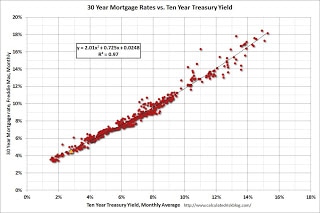
According to Lou Barnes, a local mortgage broker who is frequently quoted in the national press, when the 10 year treasury yield hits about 3.33%, we’ll be back to 5% 30 year mortgages.
Right now, the 10 year treasury is around 2.775%, up about 1.1% in just a few months. However, it has stabilized.
The big question those in the investing world are asking is whether the yield will continue up, or go back down.
If you watch my video, you’ll see that I believe the yield will go back down.
But, as Lou points out, the correlation between the 10 year yield and 30 year mortgages is very clear.
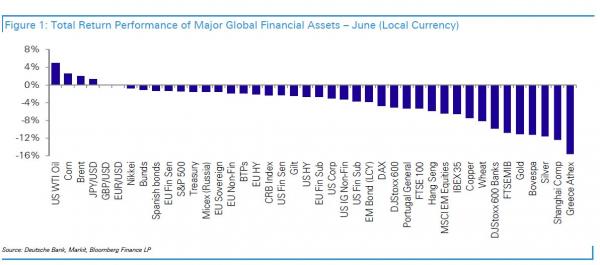
The second quarter was a tough quarter, particularly at the end. Continued emphasis on government fiscal and monetary policies, both here and abroad, played havoc with bond, stock, and precious metal investors. It’s enough to make my hair turn white!
Click on my video to get my thoughts on the past quarter (over-reaction) and the upcoming one. The year is not over!
Hello, Mike Brady here with Generosity Wealth Management, a comprehensive full service wealth management firm headquartered right here in Boulder, Colorado. I’m here for my second quarter review and my third quarter preview.
I wish I could sit here in July 2013 and say that my analysis and the reason for markets going up or going down is because of the profitability of this company or that company or this sector or that sector, but really the big news both this quarter and even as we go back to the beginning of the year with the fiscal cliff and other big topics at the time, has been the intervention and the discussion of the fiscal and monetary policy of the government. In this past quarter it has also been some news out of China that really rattled things, and then of course the continuation there in Europe.
In the middle to kind of late June, Ben Bernanke, the chairman of the Federal Reserve, gave an indication that the quantitative easing would start to drop because the Fed believed that the economy is doing much better, so therefore it’s not needed the easy money that we’ve seen in the last four to five years. What happened is, the bond market really reacted, in my opinion, overreacted, and so the prices went down on bonds, which means that the yields go up. I believe that’s going to settle… there was a lot of outflows from bond funds and bond ETF or the selling of it. I think that once people kind of step back and realize that wow – I’m not going to get any yield in a money market or a CD, etc., they’re going to reengage those particular funds and ETF. So I think that it’s really an overreaction.
At the same time, the kind of equivalent to the Fed over in China, their central bank, also there was a perception that they might have policies that would lead to a credit crunch. The Chinese market went way down as well and I think that was an overreaction. While it’s painful when that stuff happened, I’m not overly concerned as we’re going forward into the third quarter.
Europe continues to be a mess. Look at my videos going back for two years. I’m just going to sound like I’m saying the same thing over and over every quarter. Europe I think is going to continue to be a real problem. This past quarter, those areas that had problems were dividend paying stocks, bonds as I already talked about, and gold. Gold and silver has lost its luster. I think that it’s overreacted on a down side, but hopefully, if you’ve been watching my videos and listening to me, you really shouldn’t have more than, if at all, each client is different – you really shouldn’t have more than 4% or 5% anyway. If it goes down a significant amount, I think it was 23% down just in this last quarter after a huge run up for a number of years, that’s going to majorly impact what you’re doing. I think that the best thing to do is to keep the big picture in mind.
I’m going to throw up on the chart there inflection points for the last 15 years. You’re going to see that where we are, the little arrow that’s pointing there. I don’t believe that we’re at the top of a crevasse waiting to go all the way and straight down. If I were to show you a graph on back all the way to 1900, you would see that these things are normal, these variations like what you’ve seen and a tough quarter that we had, the second quarter, which really took away some of the gain from the first quarter. The reason why I’m not showing you that chart is most people’s time horizon is not another 112 years, so I’m really kind of showing the last 15 years, and hopefully your time horizon is long, even if you’ve just retired, I hope you’re going to live a very long time. I think that some of the overreaction is because the concern about the Fed, but I think the Fed, they have a rosier picture than what I’ve really seen. I think some of their inflation numbers are wrong as well.
I’m going to throw another chart up there. We’re going to see historical returns by holding period. What this shows is going back to 1950, 62 years, that the longer you hold historically, the range of your return in the various sector has a tendency to start to normalize out. Diversification, I think is really key in certain quarters and years, as I talked about gold already, that really help you. This past quarter it hurt you, so therefore, hopefully you didn’t have 100% of all of your assets in gold. That’s the purpose for diversification. It’s not a panacea in that in a generally trending down market, diversified portfolio may be down as well. However, I do think that that’s a wise approach as a tactic and a technique in order to reach your particular strategy. I keep stressing that you have to know where you’re going and have a plan, etc.
A little summary here. For the second quarter gold and dividend paying stocks, the Chinese market in general, and bonds were down, but I think that it was an overreaction. I am optimistic in that regard for the third quarter. I don’t believe, as I see things right now, that the third quarter will bring forth some huge decline and we all run for the door. I do think that we’re going to continue to be in a trading range, both this year and next year. That’s why having good managers that can take advantage of that is important. I’m a little disappointed that in June, some of those managers might not have foreseen that quick or abruptly as they could, but I think it’s an overreaction. It think it’s just a blip at this particular point.
Mike Brady, Generosity Wealth Management, (303) 747-6455.
By the way, I’m having a seminar on the 16th. Give Cassidy a call at my office if you would like to attend. It’s one hour. I’m a straight to the point, this is what I think and why I think it… My attention span is not greater than an hour so I certainly can’t expect anybody else listening to me to have an attention span greater than an hour. I’ll be very sensitive to the time. (303) 747-6455. You have a wonderful day. Thanks. Bye bye.
Here’s a good paper that studies returns going back to 1920 to see how buying a country, company, or industry that has had a decline of 60% or more does for the next 3 years.
Basically it’s saying there’s validity to Warren Buffet’s phrase “be greedy when others are fearful and fearful when others are greedy.”
Of course, there were notable exceptions to the rule, but an interesting article and study nonetheless.
I think of today’s video as my “mid-newsletter” thoughts, as I want to be timely in my communication with you.
The stock and bond markets have been more prominent in the news lately, and I want to share with you my analysis.
So, is it jumping off the ledge time, or is this just a part of the cyclical nature of the markets?
Watch my video to find out my opinion.
Hi there. Mike Brady with Generosity Wealth Management, a comprehensive, full service, wealth management firm headquartered right here in Boulder, Colorado and I wanted to send out this video because there’s been a lot of news recently about the global sell off and yields and bonds and China, et cetera, and I wanted to bring you up to speed with where it is and also, just to make sure that we’re all on the same page.
The very first thing is — step away from the ledge. Everything in my opinion is going to be all right and this is a normal thing that happens. The markets are cyclical, which means they go up and they go down. Nobody really worries about things and everyone goes on with their daily lives when things are going up. When it starts to go down a little bit, people really start to freak out but it is part of the natural cycle of the market but this most recent one, I think, has been started by a number of different factors.
The first one is just some concerns about a tightening monetary policy, both in China and in the United States. Over in China, there’s a concern that they’re having a credit crunch and that money will not be loaned out in order to continue their great growth. That has really been harming a lot of the Asian markets, leading over to Europe, which is already sick and then leading to the United States and then Bernanke last week said that he is also putting out a blueprint – an outline for a tightening monetary policy or maybe not so much of a tightening one, but not as loose as it has been, which of course, leads to from that point of view, a tightening, so I’m going to put up on the screen here, if you could look at it, it is normal for there to be a intra-year decline in the unmanaged stock market indexes. That is normal and as you can see, I’ve just focused in there a little bit, and sometimes they’re double digit returns. It does not mean that the end of the year ends negative, okay, so that’s just real important that in an up and down market, things do go down at various points and I do think that this is an overreaction. That’s my opinion.
The next chart that I’ve thrown up there are historical returns by holding period and you’ll notice that in the left hand side is the one year, the range of going back many, many years, going back to 1950 that the range for one year is very high but then as we go up five year, 10 year, 20 year, the ranges have a tendency to get smaller, so the longer a time horizon, historically at least, the smaller those ranges are and it has a tendency to work itself out.
This next chart here are the stock markets since 1900 and you’ll notice that keeping the big picture in mind, there are some times great movement on the upside, sometimes on the downside as well, but you’ll also notice that those little tiny blips, et cetera, are what they are, just blips right there. I think that having a well diversified portfolio, while it does not guarantee any kind of an outcome or an absolute return one way or the other and many times, it has a tendency to go down in a generally trending market. It is appropriate for most people and if you’re my client, we of course, have talked about what portfolio and what managers might best meet you with your goals and your risk levels, et cetera.
Remember at the beginning of the year, I talked about how I felt that this was going to be a trading range type of year to two years and I was surprised by how strong things have looked over the last five to six months. Part of that is being a correction right now. You’ll also remember that I talked about China and Europe being sick and how they might spill over into the United States and I think that we’re seeing some of that right now. What’s interesting is the sharp decline in bonds, which would mean that their yield is going up and we’re just kind of quickly show you a graph there. This is the last five years of the 10-year note and in this case, down on the yield is actually good from a price point of view. Up is actually bad, so it’s kind of a funny chart in that regards. If you’ll notice that most recently it has swung up but – so that means that the price of things going down and so you know that’s just kind of what happens, you kind of see the whole chart there. It does go up and down. I don’t think that we should necessarily freak out. These things do happen but I will keep you informed as things go on.
Mike Brady, Generosity Wealth Management.
Give me a call if there’s anything that I can do to explain a little bit further. The end of the quarter is in just a few days. I’m actually doing this Monday afternoon. The market is down today. It’s very possible that the quarter will be negative, so the year-to-date, hopefully, will be positive but it’s very possible that this quarter will be negative for both the stock and the bond market, et cetera, so we’ll have to see how things turn out. If something dramatic happens later this week, I will send another video out. Otherwise, the next video you receive from me will be my quarter end review and my quarter preview for the third quarter, so anyway. Mike Brady, 303-747-6455. You have a wonderful day. We’ll talk to you later. Bye-bye.